

Future Scope of CMA in India

Future Scope of CMA in India
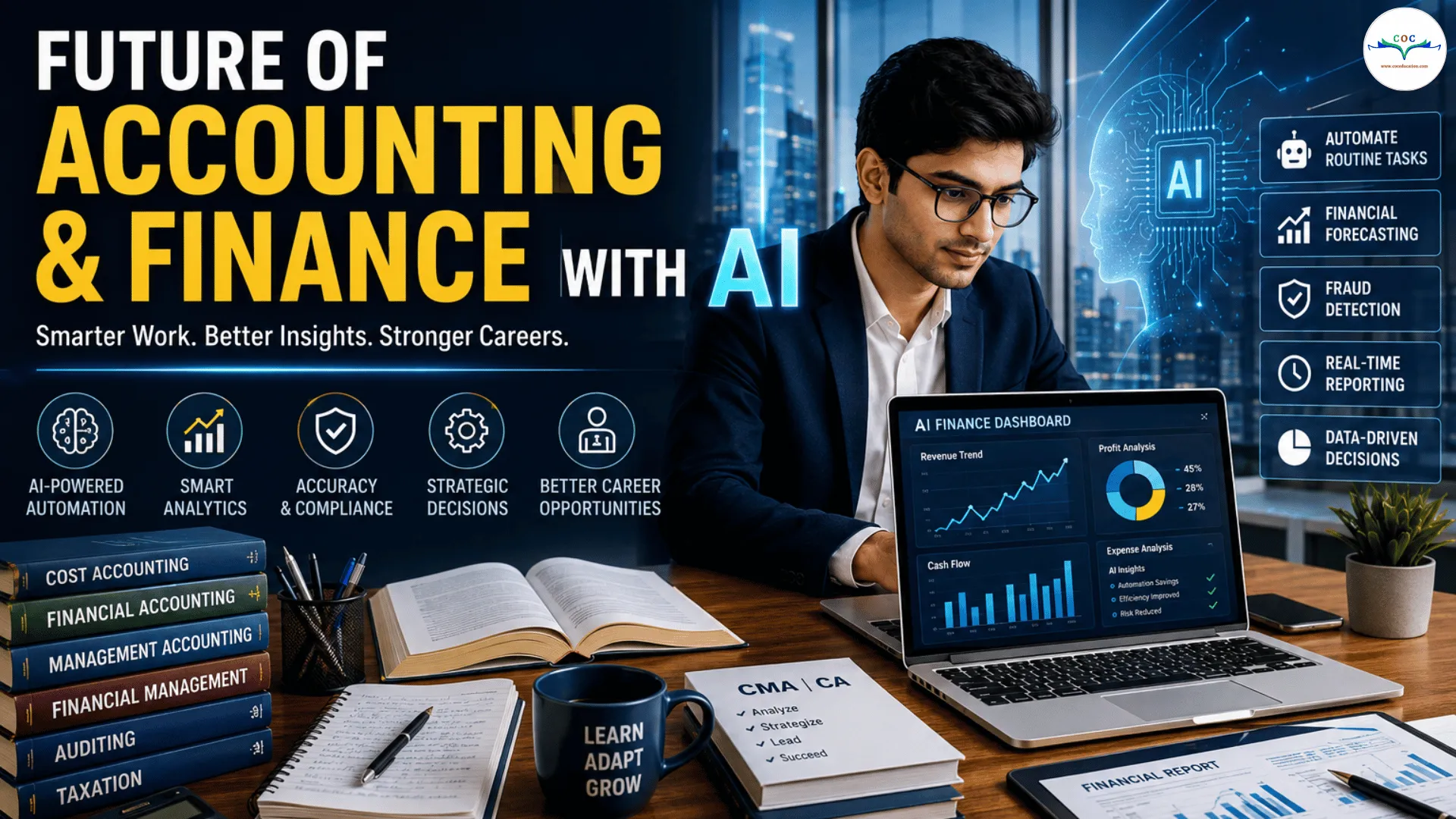
The demand for finance professionals is increasing rapidly as businesses become more data-driven and focused on cost optimization. Among the most respected professional qualifications in the finance and accounting domain, the Cost and Management Accountant (CMA) qualification continues to create excellent career opportunities across industries.
Many students often ask:
"Does CMA have a good future in India?"
The answer is yes.
With growing industrialization, regulatory requirements, digital transformation, and the need for strategic financial management, the scope of CMA professionals in India is stronger than ever.
What is CMA India?
CMA (Cost and Management Accountant) is a professional qualification offered by the Institute of Cost Accountants of India (ICMAI).
The course focuses on:
Cost Accounting
Financial Management
Taxation
Auditing
Strategic Management
Corporate Laws
Performance Management
Business Analysis
CMA professionals help organizations control costs, improve profitability, and support strategic decision-making.
Why is the Demand for CMA Professionals Growing?
Modern businesses are no longer focused only on accounting.
Companies want professionals who can:
Analyze costs
Improve efficiency
Increase profitability
Support business decisions
Manage financial risks
Ensure regulatory compliance
This is where CMA professionals play a crucial role.
As businesses continue to grow, the need for skilled Cost and Management Accountants is expected to increase significantly.
Career Opportunities After CMA
One of the biggest advantages of CMA is the variety of career options available.
Cost Accountant
Analyze production costs, control expenses, and improve operational efficiency.
Financial Analyst
Evaluate financial performance, prepare reports, and support management decisions.
Management Accountant
Provide strategic financial insights to improve business performance.
Internal Auditor
Assess internal controls, risk management processes, and compliance systems.
Tax Consultant
Handle GST, direct taxes, compliance, and tax planning activities.
Budget Analyst
Prepare budgets, forecasts, and financial planning reports.
Finance Manager
Manage financial operations and support organizational growth.
Chief Financial Officer (CFO)
Experienced CMAs can progress to senior leadership positions, including CFO roles.
Industries Hiring CMA Professionals
CMA professionals are required across various sectors.
Manufacturing
Costing
Budgeting
Inventory Control
Performance Analysis
Banking & Financial Services
Risk Analysis
Financial Reporting
Investment Planning
FMCG Companies
Cost Management
Business Analysis
Financial Planning
Information Technology
Financial Analysis
Budget Management
Cost Optimization
Consulting Firms
Advisory Services
Financial Strategy
Business Process Improvement
Government Sector
CMAs are also recruited by government organizations and public sector enterprises.
CMA Salary in India
Salary depends on factors such as:
Skills
Experience
Industry
Location
Company size
Freshers
Entry-level CMA professionals can secure attractive salary packages, especially when supported by practical skills and internships.
Experienced Professionals
With experience, CMAs often move into managerial and leadership roles with significantly higher compensation.
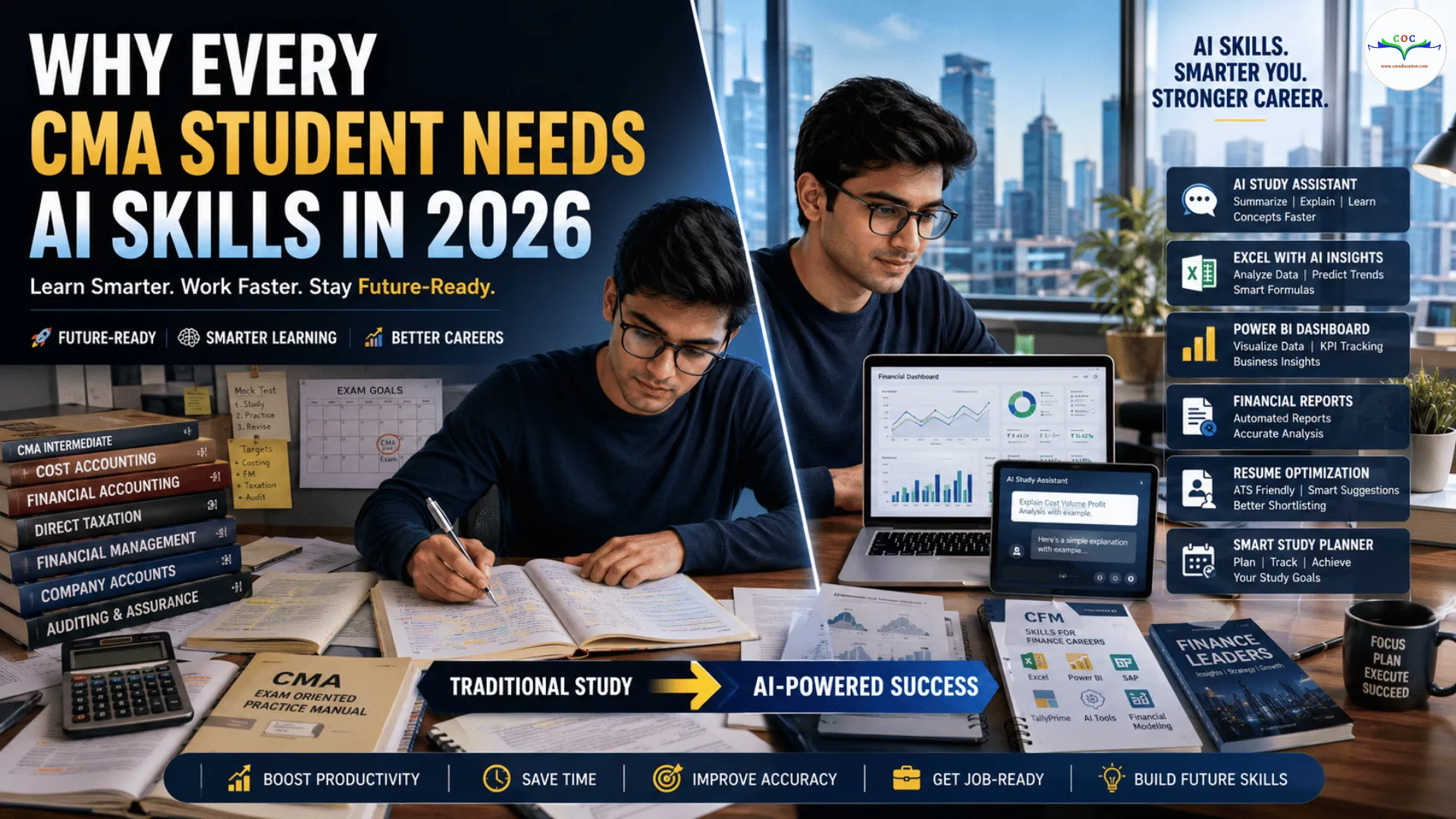
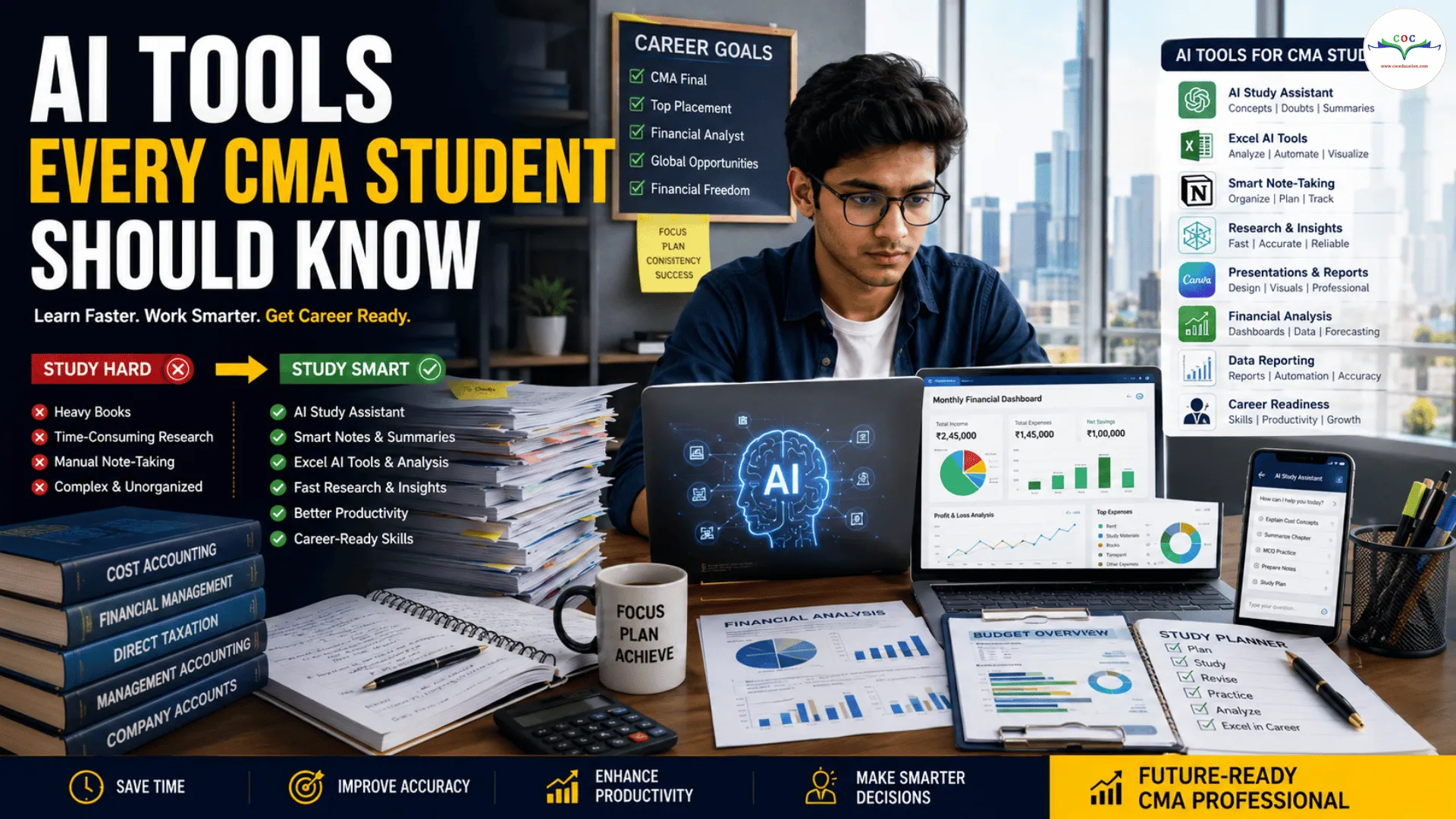
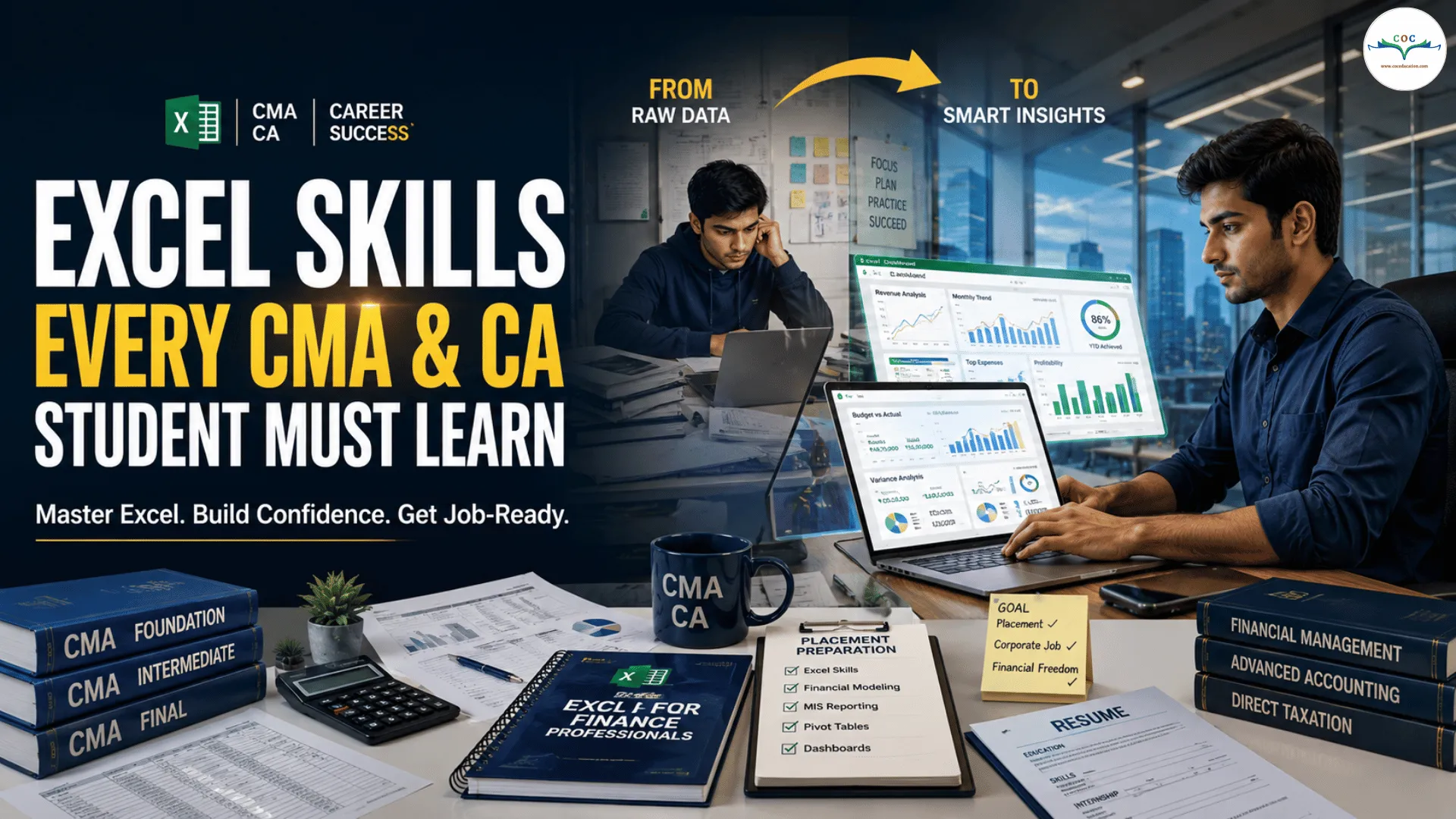
Professionals who combine CMA with skills like Excel, SAP, Power BI, Financial Modeling, and Data Analytics generally enjoy better career growth.
Skills That Increase CMA Career Opportunities
To maximize career potential, CMA students should develop practical skills alongside professional studies.
High-Demand Skills
Advanced Excel
SAP S/4HANA
Financial Modeling
Power BI
Data Analytics
GST Compliance
Budgeting & Forecasting
Business Communication
Employers increasingly prefer candidates who possess both professional qualifications and practical industry skills.
CMA vs Other Finance Qualifications
CMA is particularly valuable for students interested in:
Cost Management
Corporate Finance
Strategic Planning
Performance Management
Business Decision-Making
Its practical and industry-focused curriculum makes it highly relevant in today's corporate environment.
Is CMA a Good Career Choice in 2026 and Beyond?
Absolutely.
As companies focus more on profitability, efficiency, compliance, and data-driven decisions, the role of CMAs is becoming increasingly important.
Professionals who continuously upgrade their skills and gain practical exposure can build rewarding careers across industries.
Conclusion
The future scope of CMA in India remains highly promising. The qualification opens doors to diverse career opportunities in finance, accounting, taxation, auditing, cost management, and strategic business roles.
While the qualification provides a strong foundation, success ultimately depends on combining professional knowledge with practical skills, industry exposure, and continuous learning.