

Future of Accounting and Finance with AI
Introduction
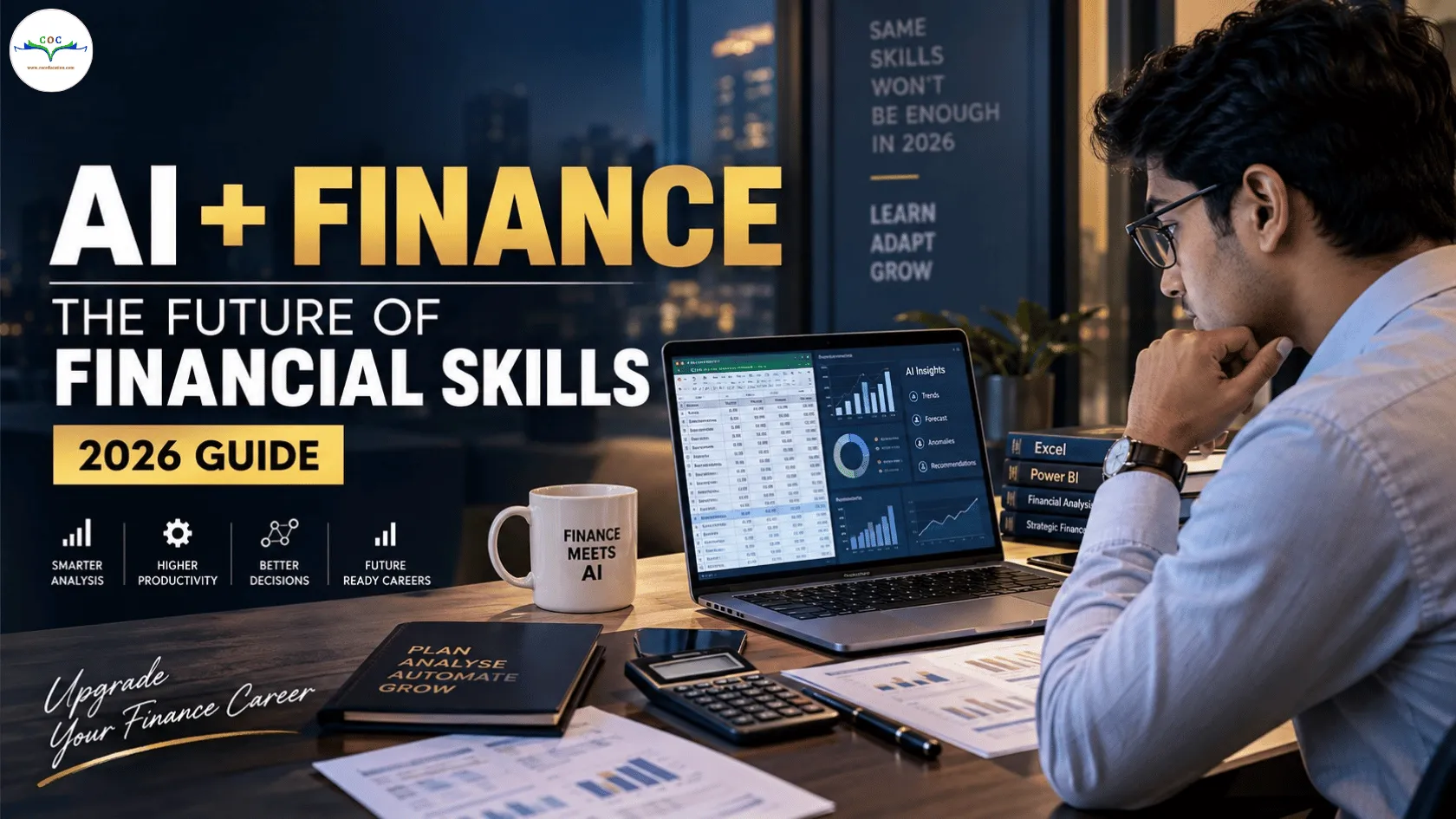
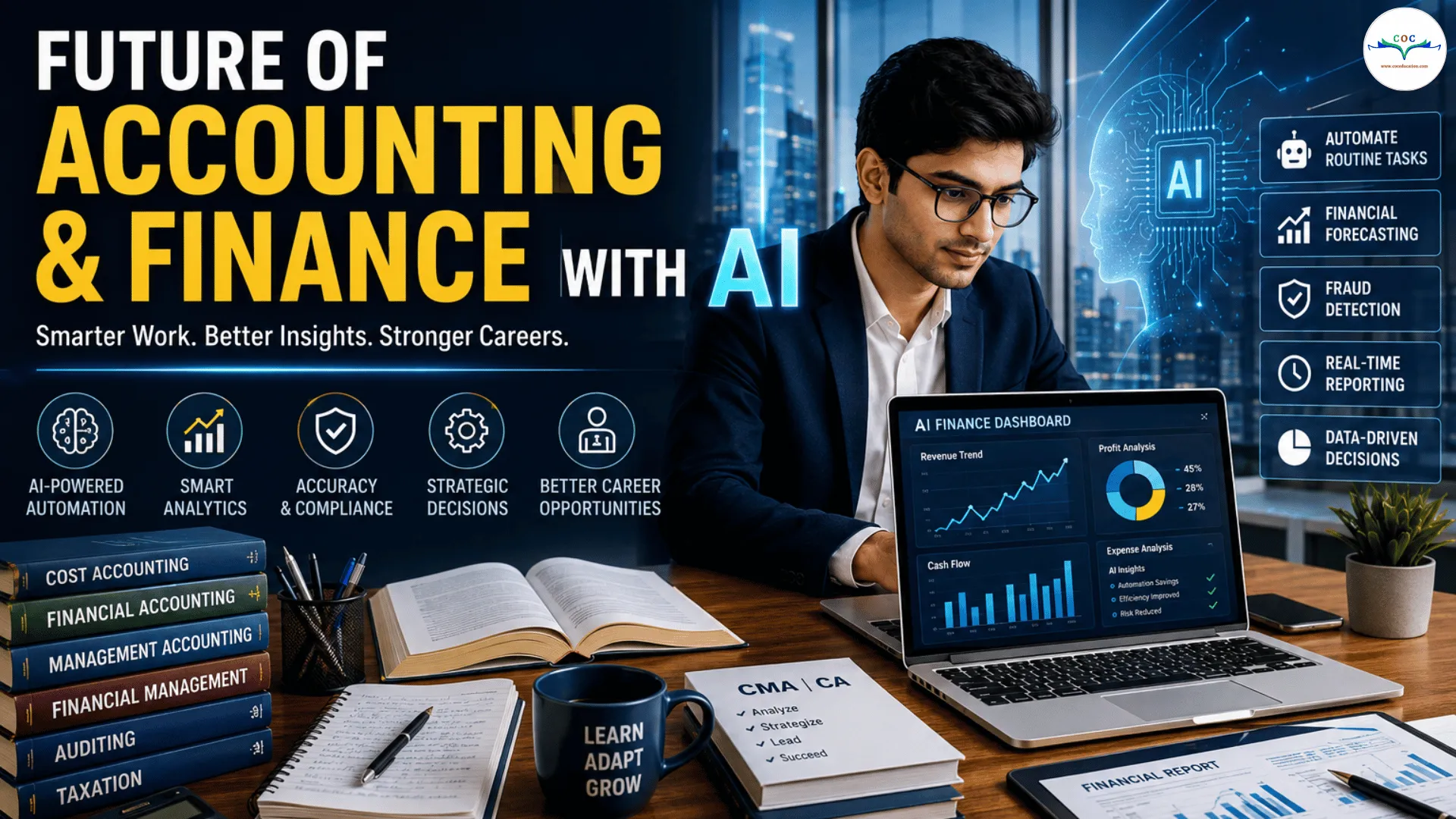
Artificial Intelligence (AI) is transforming the accounting and finance industry faster than ever before. From automating repetitive tasks to delivering real-time financial insights, AI is reshaping how businesses manage their finances and make strategic decisions.
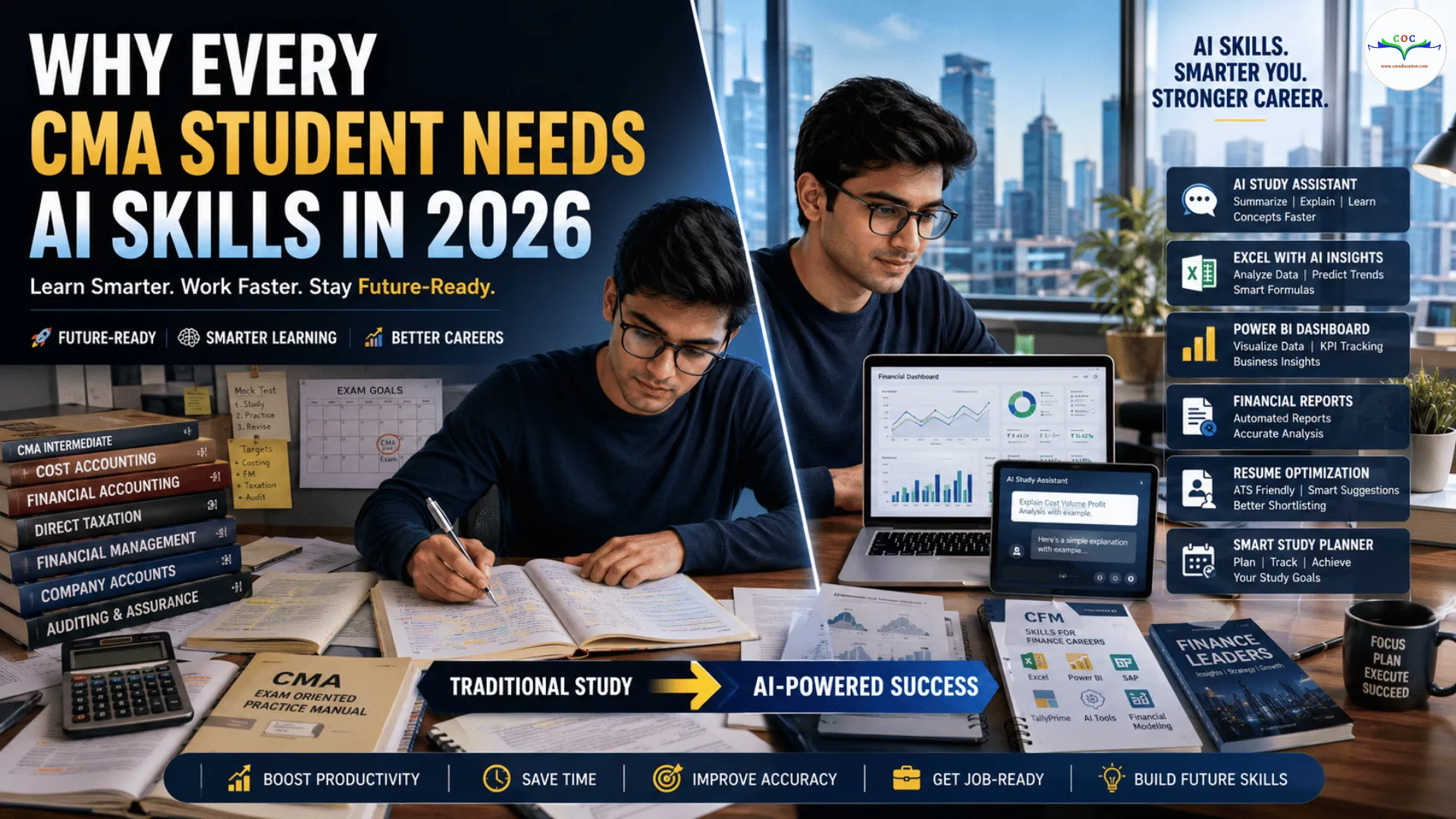
For students pursuing CMA, CA, B.Com, or M.Com, understanding AI is no longer optional—it's becoming an essential career skill. Finance professionals who combine accounting expertise with AI-powered tools will have a significant advantage in the evolving job market.
In this blog, we'll explore how AI is changing accounting and finance, the opportunities it creates, the skills students need to stay competitive, and why embracing AI today can future-proof your career.
How AI is Transforming Accounting and Finance
Traditionally, finance professionals spent countless hours on manual data entry, reconciliations, report preparation, and compliance tasks. AI now automates many of these repetitive activities, allowing professionals to focus on higher-value work such as financial planning, business strategy, and decision-making.
Today, AI is being used across finance for:
- Automating bookkeeping
- Processing invoices
- Financial forecasting
- Fraud detection
- Expense management
- Tax compliance
- Business intelligence
- Predictive analytics
- Financial reporting
Instead of replacing accountants, AI is helping them become more productive and efficient.
Why AI Matters for Future Finance Professionals
Modern organizations are looking for professionals who understand both finance and technology.
Companies value candidates who can:
- Analyze financial data using AI
- Automate routine processes
- Build dashboards
- Generate business insights
- Improve reporting accuracy
- Support strategic business decisions
Professionals who can leverage AI will be more valuable than those relying solely on traditional methods.
Major Areas Where AI is Changing Finance
1. Automated Bookkeeping
AI-powered accounting software can automatically:
- Record transactions
- Categorize expenses
- Reconcile bank statements
- Generate journal entries
- Detect duplicate entries
This reduces manual effort and improves accuracy.
2. Financial Reporting
Preparing financial reports traditionally required hours of spreadsheet work.
AI now helps finance teams:
- Generate reports instantly
- Identify trends
- Highlight anomalies
- Compare historical performance
- Create executive dashboards
This enables faster and more informed decision-making.
3. Fraud Detection
AI systems continuously monitor financial transactions and can detect unusual patterns that may indicate fraud.
Examples include:
- Suspicious payments
- Duplicate invoices
- Unauthorized transactions
- Expense irregularities
AI helps organizations minimize financial risks.
4. Forecasting and Budgeting
AI can analyze historical financial data and market trends to create more accurate forecasts.
Finance professionals use AI for:
- Revenue forecasting
- Expense prediction
- Cash flow planning
- Budget optimization
- Business planning
This leads to smarter financial decisions.
5. Taxation and Compliance
AI simplifies tax management by:
- Organizing financial records
- Calculating tax liabilities
- Identifying compliance issues
- Tracking regulatory changes
- Preparing tax reports
It reduces errors and improves compliance efficiency.
6. Business Intelligence and Analytics
Modern finance teams rely heavily on data.
AI helps professionals:
- Analyze KPIs
- Build dashboards
- Identify trends
- Predict future performance
- Generate business insights
These insights help management make strategic decisions.
Skills Future Finance Professionals Need
To succeed in an AI-driven finance industry, students should develop both technical and practical skills.
Core Accounting Skills
- Financial Accounting
- Cost Accounting
- Taxation
- Auditing
- Corporate Finance
- Financial Management
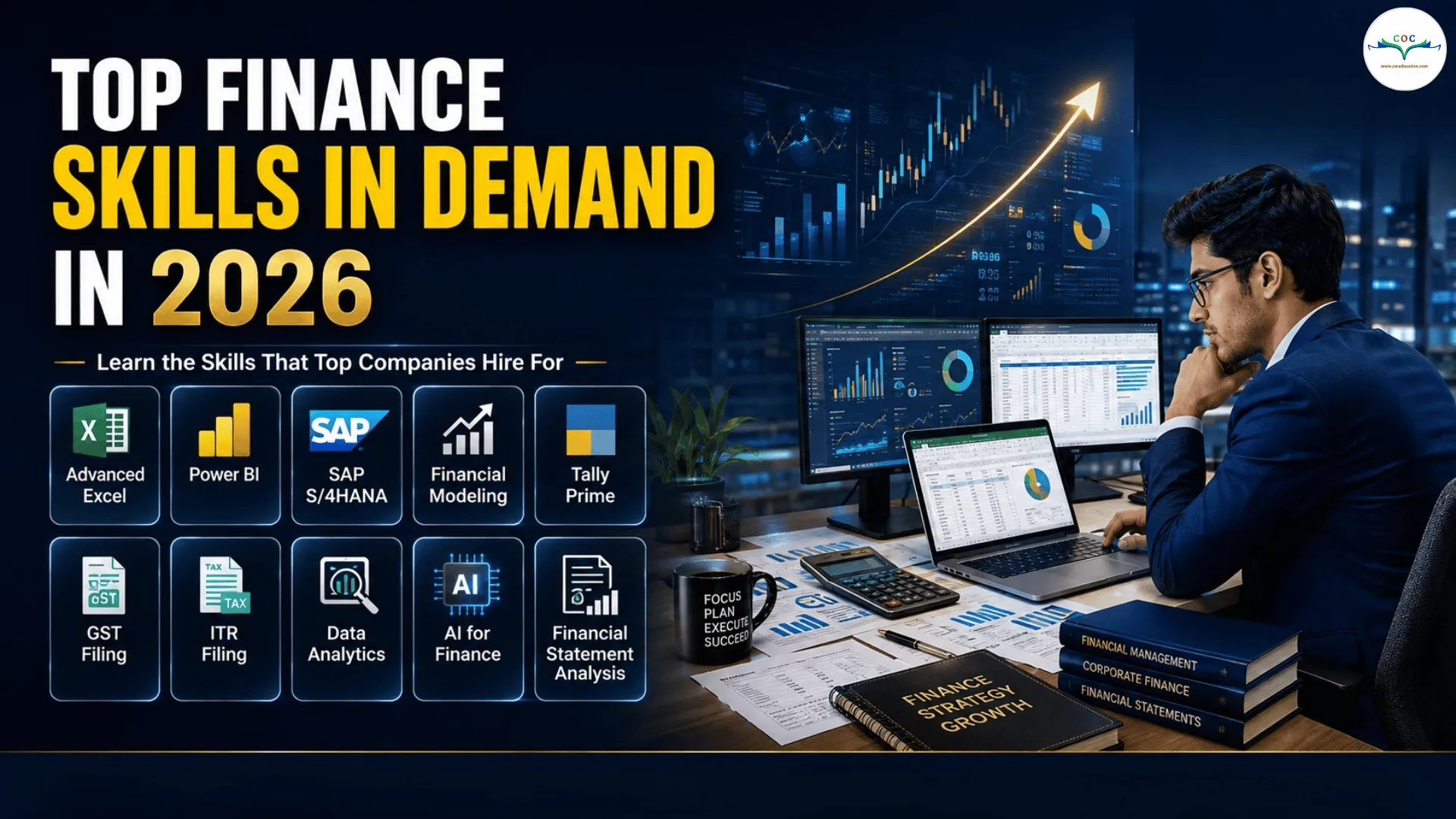
Technology Skills
- Artificial Intelligence fundamentals
- Advanced Microsoft Excel
- Power BI
- Financial Modeling
- SAP S/4HANA
- TallyPrime
- Data Analysis
- Business Intelligence
Soft Skills
- Communication
- Critical Thinking
- Problem Solving
- Presentation Skills
- Adaptability
- Decision Making
The combination of finance expertise and technology skills creates highly employable professionals.
Will AI Replace Accountants?
One of the most common concerns is whether AI will replace accounting professionals.
The answer is No—but it will change the way accountants work.
AI is excellent at:
- Processing data
- Performing calculations
- Automating repetitive tasks
- Generating reports
However, it cannot replace:
- Professional judgment
- Strategic planning
- Client relationships
- Ethical decision-making
- Business consulting
- Leadership
Finance professionals who embrace AI will remain highly valuable.
Career Opportunities in the AI Era
The integration of AI is creating exciting new career opportunities, including:
- Financial Analyst
- Business Analyst
- Cost Accountant
- Management Accountant
- Finance Manager
- Data Analyst
- Financial Planning Analyst
- MIS Executive
- SAP Finance Consultant
- Power BI Developer
- Business Intelligence Analyst
- AI-Enabled Finance Professional
Students with AI and analytics skills will stand out during placements and interviews.
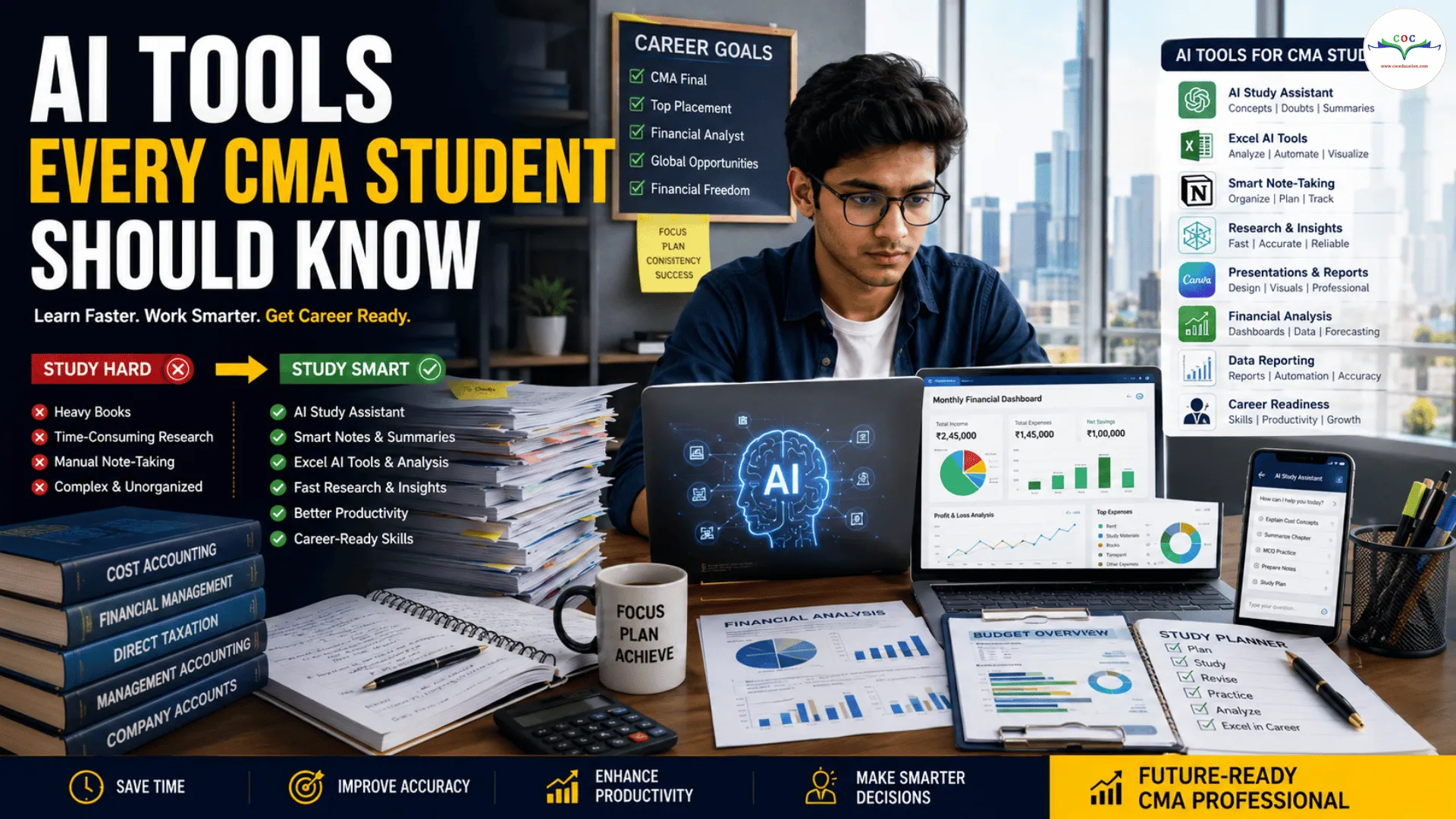
Practical AI Tools Every Finance Student Should Learn
To stay ahead of the competition, students should become familiar with tools such as:
- ChatGPT
- Microsoft Copilot
- Google Gemini
- Power BI
- Advanced Excel
- Notion AI
- Canva AI
- Grammarly
- Perplexity AI
- AI-powered resume builders
Learning these tools can improve productivity, research, reporting, and communication.
How Students Can Prepare for the Future
Here are some practical steps to build an AI-ready finance career:
- Learn Advanced Excel and Power BI.
- Practice financial modeling with real-world datasets.
- Explore AI tools for research and study.
- Gain hands-on experience with SAP S/4HANA and TallyPrime.
- Build a professional LinkedIn profile.
- Work on communication and presentation skills.
- Stay updated with finance and technology trends.
- Earn certifications in AI and data analytics.
Continuous learning is the key to long-term career success.
Become Industry-Ready with CFM
A professional qualification like CMA or CA builds a strong foundation in accounting and finance. However, employers increasingly seek candidates who also possess practical, job-ready skills.
The Chartered Financial Management (CFM) program helps bridge this gap by providing hands-on training in industry-relevant tools and technologies, including:
- SAP S/4HANA
- Advanced Excel
- Power BI
- Financial Modeling
- TallyPrime
- GST & ITR Filing
- Zoho Accounting
- AI Tools for Finance
- Resume Building & Interview Preparation
By combining your CMA or CA studies with practical finance skills, you can improve your confidence, enhance your employability, and prepare for internships, campus placements, and corporate finance roles.
Conclusion
Artificial Intelligence is shaping the future of accounting and finance, creating smarter workflows, faster decision-making, and new career opportunities. Rather than replacing finance professionals, AI is empowering them to focus on strategic analysis, business growth, and value creation.
Students who embrace AI, develop practical digital skills, and continue learning will be better positioned for success in the modern finance industry.